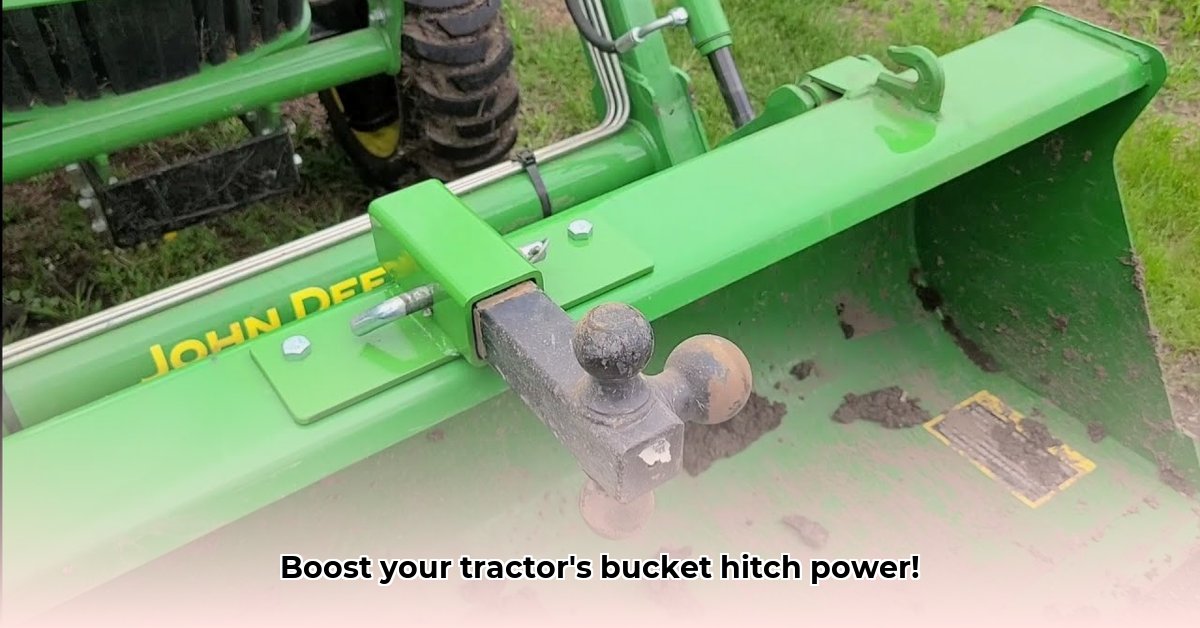
Sick of wrestling with tractor attachments and wasting precious time? Universal tractor hitches are the solution. This guide will show you how to save time and money by maximizing your tractor's capabilities. We'll cover selecting the right hitch, safe installation, essential maintenance, and calculating your return on investment (ROI). Get ready to transform your farm operations for increased efficiency and profitability. For more information on tractor bucket attachments, check out this helpful resource: learn more.
Hitch for Tractor Bucket: Optimizing Farm Efficiency
Farming demands juggling multiple tasks. Every minute spent fighting with attachments is a minute lost to productivity. A universal tractor bucket hitch streamlines operations, saving you both time and money. Consider it an investment in a smoother, more profitable workday.
Decoding the Different Types of Tractor Bucket Hitches
Selecting the right hitch hinges on your tractor's size and typical workloads. Several types exist, each with its own strengths and weaknesses:
Category 1 Hitches: Ideal for smaller to medium-sized tractors. Simple, reliable, and widely available, but may lack the power for heavy lifting. Think of them as the reliable workhorses for lighter tasks.
Category 2 Hitches: Designed for larger tasks and heavier loads. They offer increased lifting power and stability, though perhaps overkill for lighter implements.
Category 3 Hitches: The heavyweights, suited for the largest tractors and most demanding jobs. Powerful and robust, but come with a higher price tag. These are for serious lifting and the toughest of farming conditions.
Quick-Attach Hitches: These are designed for speed, allowing rapid implement changes. The initial cost is higher, but the time saved can quickly offset this expense, particularly during busy periods.
Choosing the right hitch is like choosing the right tool for the job. A mismatch can lead to frustration and potentially damage. Consider the typical weight of your loads and your tractor's size.
Ensuring Compatibility: A Critical Step
Before purchasing, thoroughly verify compatibility. This prevents costly mistakes and safety hazards. A simple checklist ensures a smooth integration:
Consult your tractor's manual: This manual provides crucial specifications on compatible hitch types and weight limits. It's your primary resource for verifying compatibility.
Verify hitch specifications: Ensure the hitch's weight rating exceeds the combined weight of the bucket and load. Allow for a safety margin.
Inspect bucket mounting points: These points must precisely match the hitch for secure attachment.
Consult your equipment dealer: They are experts in compatibility and can offer personalized guidance. Their expertise can prevent costly errors.
Ignoring compatibility leads to potential problems. Thorough verification safeguards your investment and ensures safe operation.
Installing Your New Hitch: A Step-by-Step Guide
Installing a hitch isn't complex, but precision is vital. Here's a step-by-step process:
Read the instructions: Each hitch model has specific installation procedures. Carefully review the instructions before starting.
Prepare your tractor: Ensure the tractor is parked level, securely braked, and the PTO (Power Take-Off) is disengaged.
Align the hitch: Carefully align the hitch with your tractor's three-point linkage. Precise alignment is crucial for stability and safe operation.
Secure the hitch: Attach all pins and locking mechanisms, ensuring they're securely fastened. Double-check for tightness and stability.
Final inspection: Before starting the tractor, thoroughly inspect all connections. Confirm everything is secure and properly aligned.
Prioritize safety throughout the installation process. Never rush; careful execution prevents accidents.
Maintaining Your Hitch: Preventative Maintenance
Regular maintenance extends your hitch's lifespan and prevents costly repairs.
Regular inspections: Check for wear, tear on pins, bolts, and hydraulic components. Look for signs of damage or stress.
Proper lubrication: Apply grease to moving parts to reduce friction and extend component life.
Address issues promptly: Don't ignore small problems. Attend to any hydraulic leaks or loose connections immediately.
Here's a table summarizing common issues and solutions:
| Problem | Solution |
|---|---|
| Worn or bent pins | Replace the pins. Consider using stronger materials. |
| Hydraulic fluid leaks | Inspect hoses and seals. Replace damaged components. |
| Loose connections | Tighten bolts and nuts. Use locking mechanisms if needed. |
| Difficulty attaching bucket | Check alignment. Minor adjustments may be necessary. |
The Bottom Line: Is a Universal Hitch a Worthwhile Investment?
While the initial cost might seem substantial, consider the long-term savings. Calculate the time currently spent changing attachments. How much does this cost in labor, fuel, and lost productivity? A quality hitch often provides a significant return on investment (ROI) through increased efficiency. Studies show farmers can save many hours annually, leading to considerable cost savings. It's an investment in seamless farm operations.
Remember, ongoing research continually improves hitch designs. Staying informed about advancements ensures you're using the best tools for the job.
Key Takeaways:
- Choosing the right hitch optimizes farming efficiency.
- Understanding hitch types ensures compatibility.
- Proper maintenance minimizes downtime and extends lifespan.
- A cost-benefit analysis justifies investment in efficient systems.